



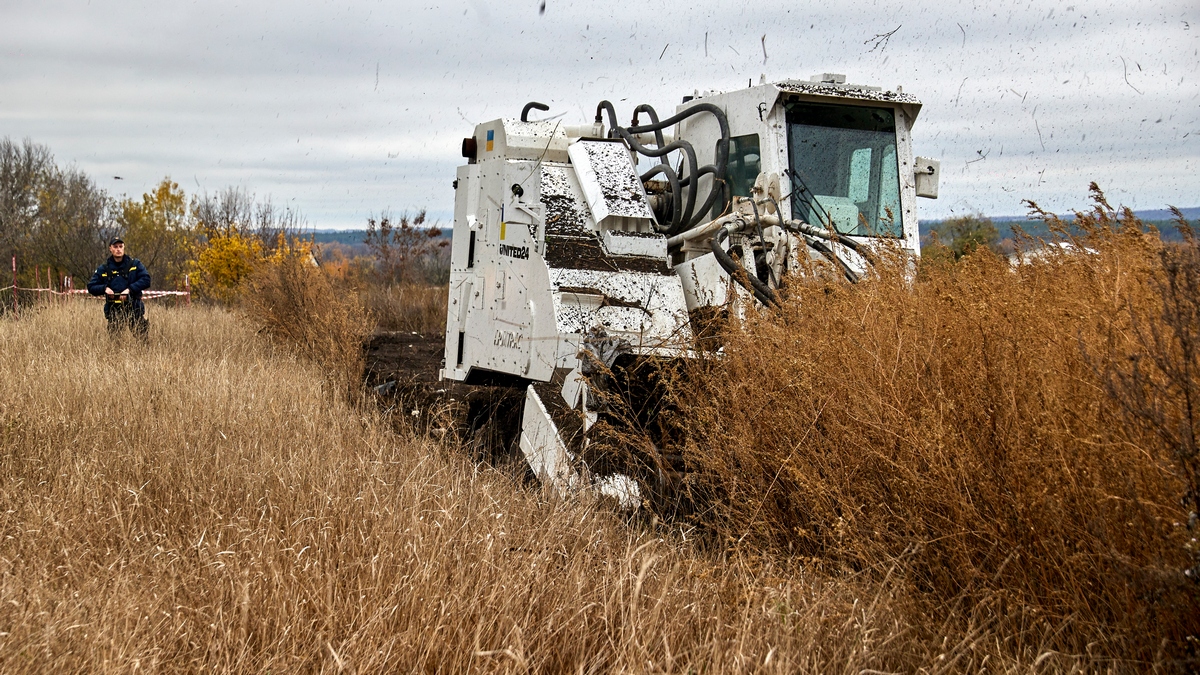
Despite the Ukrainian government’s commitment to fully funding agricultural land clearance operations, a significant shadow market for demining services has emerged across the country. Landowners and farmers, facing lengthy bureaucratic processes and extended waiting times, are increasingly turning to unofficial demining operators to restore their fields to productive use. This parallel economy reflects the enormous scale of Ukraine’s mine contamination problem and the urgent economic pressures facing the agricultural sector, which remains one of the nation’s most vital industries.
The Scale of Ukraine’s Contamination Crisis
Ukraine now holds the grim distinction of being one of the most heavily mined countries in the world. According to various estimates, approximately 30 percent of Ukrainian territory may be contaminated with explosive remnants of war, including anti-personnel mines, anti-tank mines, unexploded ordnance, and cluster munitions. This contamination spans an area larger than the entire territory of some European nations, creating an unprecedented humanitarian and economic challenge. The agricultural sector, which historically contributed around 10 percent of Ukraine’s GDP and employed millions of people, has been particularly devastated by this crisis. Farmers who once cultivated some of Europe’s most fertile black soil now face the impossible choice between leaving their land fallow or risking their lives to work contaminated fields.
The official state demining program, while ambitious, simply cannot keep pace with the enormous demand. Government-certified demining teams operate under strict international standards, using sophisticated equipment and following protocols established by organizations such as the United Nations Mine Action Service. However, the certification process for cleared land is time-consuming, and the backlog of requests continues to grow. Experts estimate that at current official capacity, it could take decades to fully clear all contaminated agricultural land, a timeline that most farmers cannot afford to accept given the immediate economic pressures they face.
Economics Driving the Shadow Market
The emergence of illegal demining services reflects the harsh economic realities confronting Ukrainian agriculture. With global food prices fluctuating and operational costs rising, farmers cannot afford to leave productive land unused for years while waiting for official clearance. The shadow market offers a faster, though significantly more dangerous, alternative. Unofficial demining operators, often former military personnel or individuals with some explosive ordnance disposal experience, charge fees that many farmers consider acceptable given the potential agricultural returns. These operations typically lack proper insurance, use inferior equipment, and follow no standardized safety protocols, creating serious risks for both the workers and future users of the land.
The legal implications for landowners who engage these services are substantial. Using uncertified demining services violates Ukrainian law and can result in criminal charges. Moreover, land cleared through unofficial channels cannot receive the official safety certification required for many commercial purposes, including export crop production for international markets. Insurance companies will not cover accidents on unofficially cleared land, leaving farmers exposed to enormous liability. Despite these risks, the economic calculus continues to drive many toward the shadow market, particularly smaller farmers who lack the financial reserves to wait for official processing.
International Response and Future Challenges
The international community has pledged significant resources to address Ukraine’s demining crisis. Countries including the United States, United Kingdom, Japan, and various European Union members have contributed funding and equipment to expand official demining capacity. International organizations are working to train additional certified demining specialists and to develop new technologies that could accelerate clearance operations. Some innovative approaches, including the use of drones for initial surveys and artificial intelligence for pattern recognition in contaminated areas, show promise for increasing efficiency.
However, experts warn that eliminating the shadow market will require addressing its root causes rather than simply criminalizing participants. This means dramatically scaling up official capacity, streamlining bureaucratic processes, and providing financial support to farmers waiting for clearance. The experience of other post-conflict nations, from Cambodia to Bosnia, demonstrates that mine clearance is a generational challenge requiring sustained commitment and resources. Ukraine’s situation is complicated by the ongoing conflict, which continues to add new contamination even as clearance efforts proceed. The ultimate resolution of this crisis will depend not only on peace but also on the international community’s long-term dedication to supporting Ukraine’s recovery and the safety of its agricultural workforce.
Expert Opinion: The emergence of shadow demining operations represents a dangerous but predictable response to institutional capacity gaps in post-conflict reconstruction. Unless Ukraine receives significantly increased international support to scale official demining operations by at least tenfold, this illegal market will continue to grow, potentially resulting in hundreds of preventable casualties among farmers and informal demining workers over the coming years. The international community must recognize that investing in rapid agricultural land clearance is not merely humanitarian assistance but essential infrastructure for global food security.